

ABCL635

Neurokinin 3 Receptor (NK3R)
Moderate-to-severe vasomotor symptoms (VMS) associated with menopause
Endocrinology / Women’s health
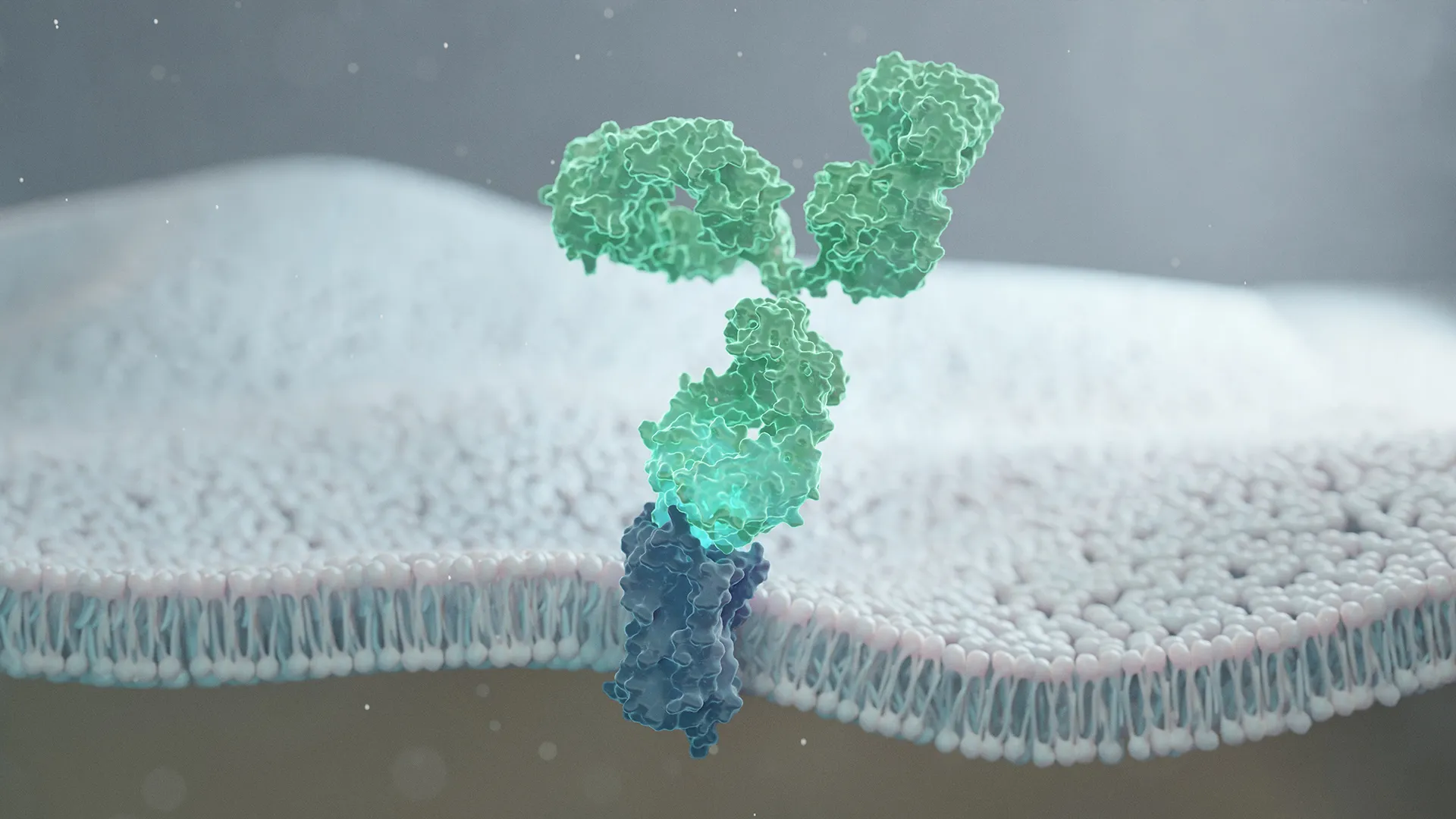
ABCL635 is a potential first-in-class antibody medicine for the non-hormonal treatment of moderate-to-severe VMS (commonly known as hot flashes) associated with menopause.
ABCL635 specifically targets NK3R, a complex membrane protein found on KNDy neurons in the infundibular nucleus of the hypothalamus that help regulate body temperature. ABCL635 is the first AbCellera-led program generated using our GPCR and ion channel technologies. It is currently being studied in a phase 1/2 trial to evaluate safety, tolerability, pharmacokinetics, pharmacodynamics, and the frequency and severity of VMS with subcutaneous doses of ABCL635.
Symptoms experienced during menopause are a significant burden.
VMS are the most frequent reason for seeking medical care for menopause.1 They are characterized by a sudden and intense feeling of heat that leads to sweating, chills, and interrupted sleep.2 VMS can persist for over four years post the final menstrual period,3 and the impact is felt across many aspects of everyday life, including sleep, concentration, energy and mood, work, social activities, and relationships.2
It is estimated that more than 12 million women in the US experience moderate-to-severe VMS, of which more than six million seek treatment.4 Menopause hormone therapy (MHT) is the current standard of care for VMS. While MHT is effective, it is estimated that it is unsuitable for 20% of women due to contraindications or other factors,5 making non-hormonal treatments for VMS an important option for those women.
As an antibody-based therapeutic, ABCL635 has the potential to offer several benefits over existing non-hormonal treatments, and aims to provide a treatment option that has:
- Efficacy comparable to small molecules;
- A differentiated safety profile without the need for liver enzyme monitoring; and
- A convenient once-monthly subcutaneous self-injection.
- Williams, RE. et al. Healthcare seeking and treatment for menopausal symptoms in the United States. Maturitas. 2007;58(4):348-358. doi: 10.1016/j.maturitas.2007.09.006.
- Monteleone, P. et al. Symptoms of menopause — global prevalence, physiology and implications. Nat Rev Endocrinol. 2018;14:199–215. doi: 10.1038/nrendo.2017.180.
- Avis, NE. et al. Duration of Menopausal Vasomotor Symptoms Over the Menopause Transition. JAMA Intern Med. 2015; 175(4):531-539. doi: 0.1001/jamainternmed.2014.8063.
- Management estimate based on US census data and References 6-8.
- Management estimate based on References 6 and 7.
- Stute, P. et al. Evaluation of the impact, treatment patterns, and patient and physician perceptions of vasomotor symptoms associated with menopause in Europe and the United States. Maturitas. 2022; 164:38-45. doi:10.1016/j.maturitas.2022.06.008.
- Nappi, RE. et al. Global cross-sectional survey of women with vasomotor symptoms associated with menopause: prevalence and quality of life burden. Menopause. 2021; 28(8):875-882. doi: 10.1097/GME.0000000000001793.
- Todorova, L. et al. Prevalence and impact of vasomotor symptoms due to menopause among women in Brazil, Canada, Mexico, and Nordic Europe: a cross-sectional survey. Menopause. 2023;30(12):1179-1189. doi: 10.1097/GME.0000000000002265.
ABCL635 targets a complex membrane protein on neurons that helps regulate body temperature.
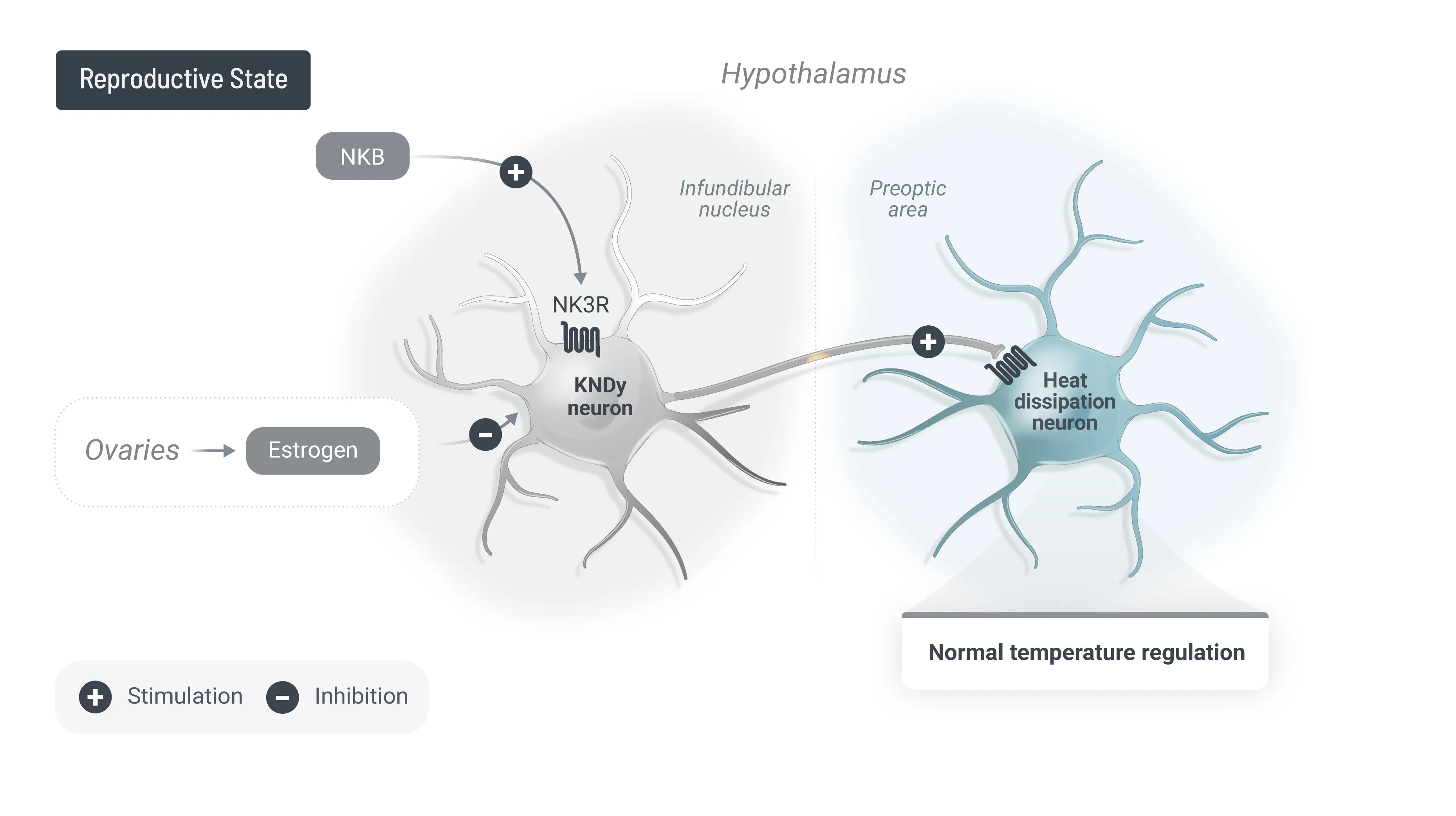
KNDy neurons help maintain body temperature by activating heat dissipation neurons, found in a specialized region of the hypothalamus. Two signals help balance KNDy neuron activity: (1) NKB activates KNDy neurons by binding to a protein on the cell surface called NK3R, (2) Estrogen, produced by the ovaries, inhibits KNDy neurons. In a reproductive state, these two signals are balanced to maintain normal body temperature.
KNDy: kisspeptin, neurokinin B, and dynorphin; NKB: neurokinin B.
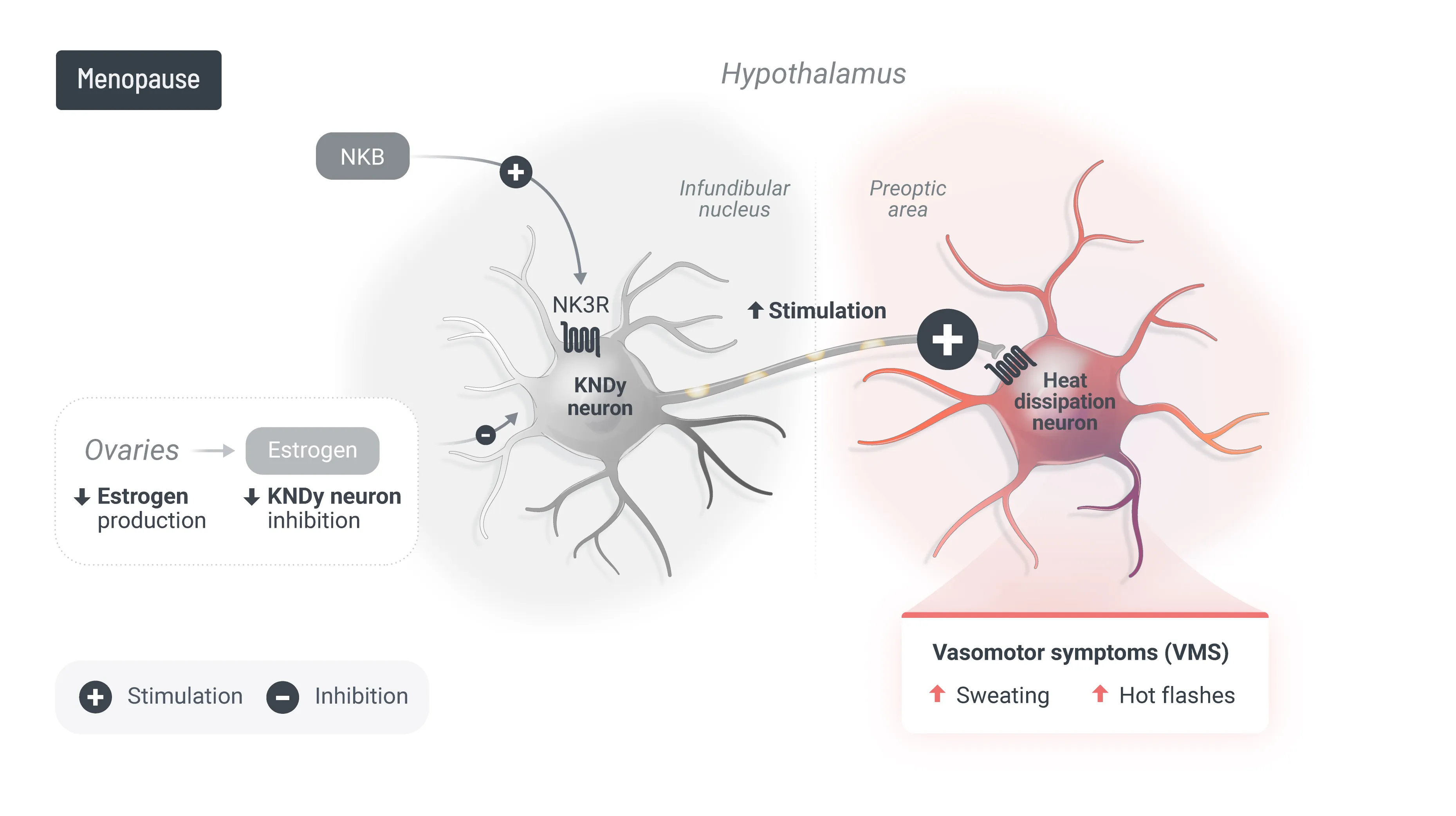
During menopause, the ovaries produce less estrogen, resulting in unbalanced KNDy neuron activity. NKB continues to activate KNDy neurons, leading to over-activation of heat dissipation neurons and vasomotor symptoms (VMS).
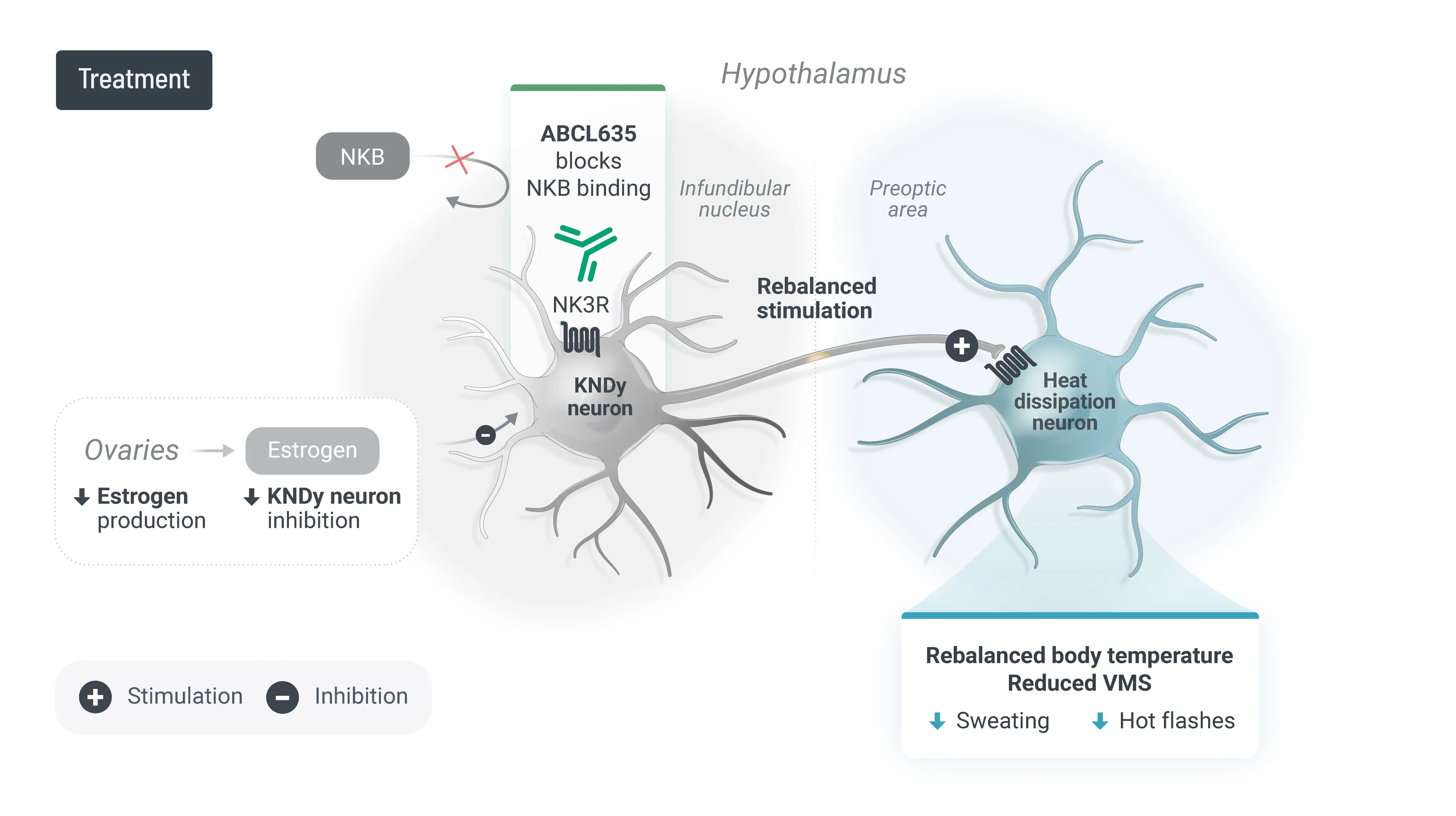
ABCL635 is an antibody that binds NK3R to prevent activation of KNDy neurons by NKB. Blocking NKB signaling has been shown to rebalance KNDy neuron activity, helping to reduce VMS associated with menopause.
Proposed mechanism of action for ABCL635 based on AbCellera nonclinical data and published literature.